
October 30, 2026
The future of advice is proactive
Why the annual review shouldn’t decide when you talk to clients, and how to reach them before they have to ask.

I think advisors should change one habit: stop waiting for the client to ask, and get there first.
The current way
Two years ago, before we built anything, we spoke to 800 advisors. Most of them described the same model: each client gets one review a year, on the anniversary of when they first became a client.
When we asked why, the answer was capacity. Each review takes hours to prepare, hold and follow up, on top of everything else in the week. Somewhere around 150 clients, the year is full. We kept hearing a version of the same line: “I’ve hit my 150. I can’t fit any more clients in.”
142
clients per advisor, on average
It works, but it leaves a lot on the table. You can plan your year around it, prepare properly for every meeting and give every client the same level of service. But the best relationships are built on the right advice at the right time. Clients get worried or unsure about their money whenever something happens in their life, and that rarely lines up with their review date. They should be heard when they need to be. So why is time with the people who drive your business organized once a year?
45%
of households rate proactivity as highly important in the firms that look after their money
Today, most of the work starts when something lands in your inbox, and it rarely lands at a good time. One advisor told us that when layoff rumors hit a big tech company, thirty of his clients who worked there called in the same week. Most of them said some version of “I could lose my job any day.” The accountant’s questions about last year’s numbers turn up the day before a filing deadline. A trust document sits unread for a week because nobody flagged it. Every one of those gets a careful answer. But only after the client, or someone working for them, has decided it’s worth raising. They hired you so they wouldn’t have to.
What it could look like instead
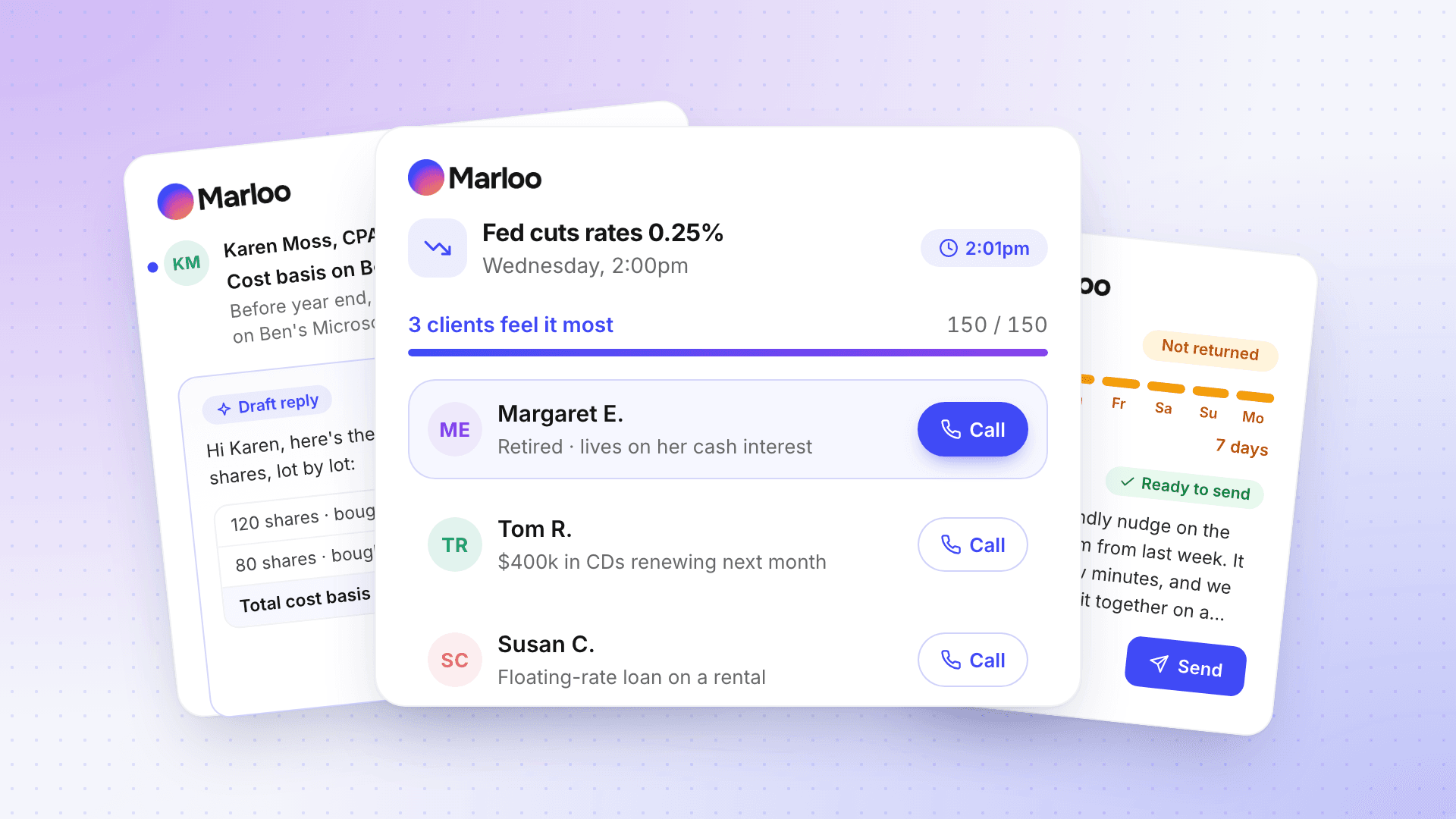
A rate change. The Fed moves on a Wednesday afternoon. Within minutes you know which three clients feel it most, and the retiree living off the interest on her cash is first on your call list.

- MECallMargaret E.Retired · lives on her cash interest
- TRCallTom R.$400k in CDs renewing next month
- SCCallSusan C.Floating-rate loan on a rental
The accountant’s email. It arrives at 11pm, asking about the cost basis on a client’s Microsoft shares before year end. By the time you’ve woken up, the answer’s drafted, waiting for you to check.
Hi Karen, here's the cost basis on Ben's Microsoft shares, lot by lot:
The client who hasn’t replied. She meant to send back the last beneficiary form and never did. A week on, there’s a short, friendly nudge ready to go out.
Hi Emily, a friendly nudge on the beneficiary form from last week. It only takes a few minutes, and we can go through it together on a quick call if that's easier.
None of this should wait for you to ask, because your tools should already know how you and your firm like to work. You still make every call, and nothing goes out until you’ve approved it.
Being there when it counts
Being the trusted advisor is a timing game as much as anything else. Sometimes what the client needs from that call is reassurance, in a voice they trust. That can matter as much as the advice itself.
“I’ve seen what’s happened, I’ve considered what it means for you, and you’re still on track.”
- Call list for the rate change
- Reply to Karen Moss, CPA
- Nudge to Emily Carter
Your job shouldn’t be to click around and execute logic you already know.
Proactive advice comes down to relevance, timing and follow-through. When the routine work starts itself, you get to do the work nobody ever had time for, like getting to know a client’s kids before the money passes to them.
Rethinking this takes some out of the box thinking, and some things will break. The first is the review calendar: advisors need to stop it from running their year. Keep the annual review, but don’t let it decide every conversation. If you believe things could be done a better way, it’s worth a shot, isn’t it?
Different questions come at different times. The advisors that offer the best experience will be the ones who know what their clients need before they do, and are there for them in their time of need.
The future of advice is proactive.